A reason to pause here
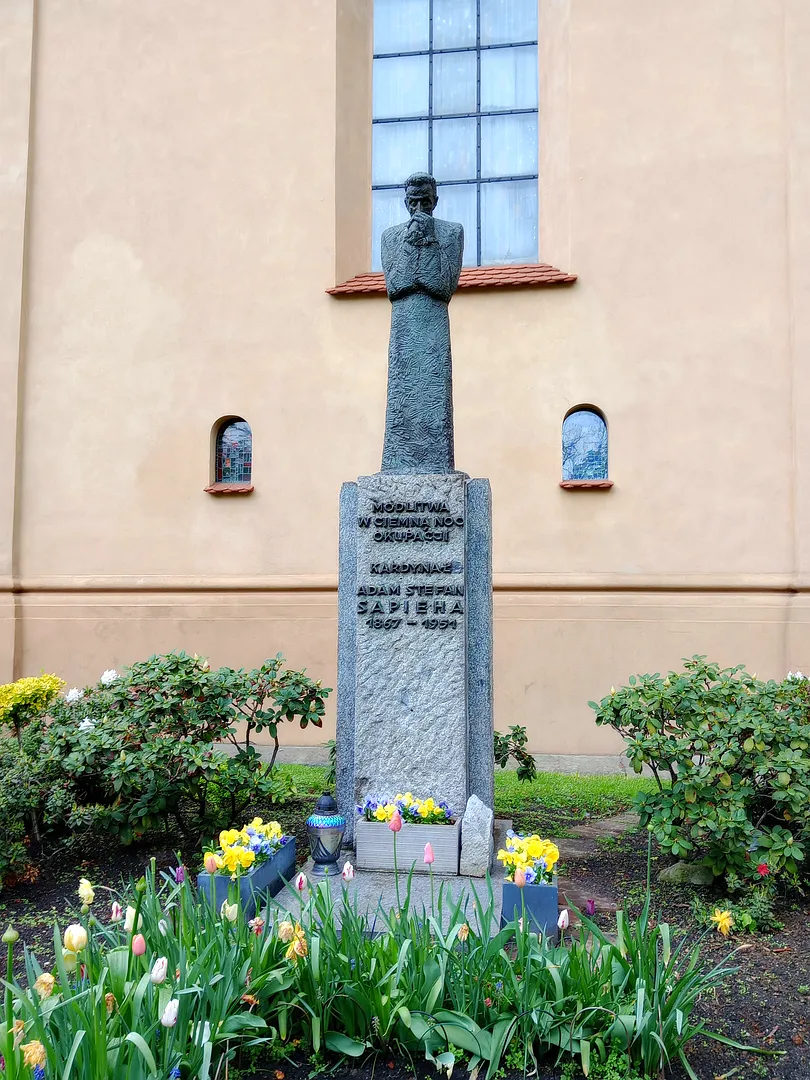
The statue stands close to the church wall, among the planting. It asks for a smaller pause than the broad square nearby: enough time to read the name and understand the person remembered here.
Sapieha and the years of occupation
Adam Stefan Sapieha became bishop of Kraków in 1911 and archbishop in 1926. During the German occupation he organised aid and opposed the persecution of the population. He died in 1951.
The bronze monument by August Zamoyski stands beside the Franciscan church on Franciszkańska Street. Its inscription refers to prayer during the occupation. The Centre for Documentation of the Independence Movement records the sculpture’s arrival in Kraków in 1976 and its placement at this site in 1984.
Look beside the church wall
The figure’s position among the planting makes this a quieter stop than the open square nearby. We would read the inscription, then look across towards the Bishops’ Palace. Knowing whose name is on the base gives this small stretch of street a more specific history.
Plan the visit
Find the monument beside the Franciscan church at Franciszkańska 2. It can be viewed from outside without an exhibition ticket. Keep the path clear for church visitors and leave the planted beds undisturbed. Interior access to the church and Bishops’ Palace has separate restrictions.
- Combine the exterior stop with the Franciscan church frontage.
- Check church access before planning an indoor visit.
Planning sources
Visitor conditions and schedules can change. Check these official sources before travelling.
- Centre for Documentation of the Independence Movement: Sapieha monument record
- Saint Mary’s Basilica: Sapieha’s life and wartime aid
Source links checked September 30, 2026.