A reason to pause here
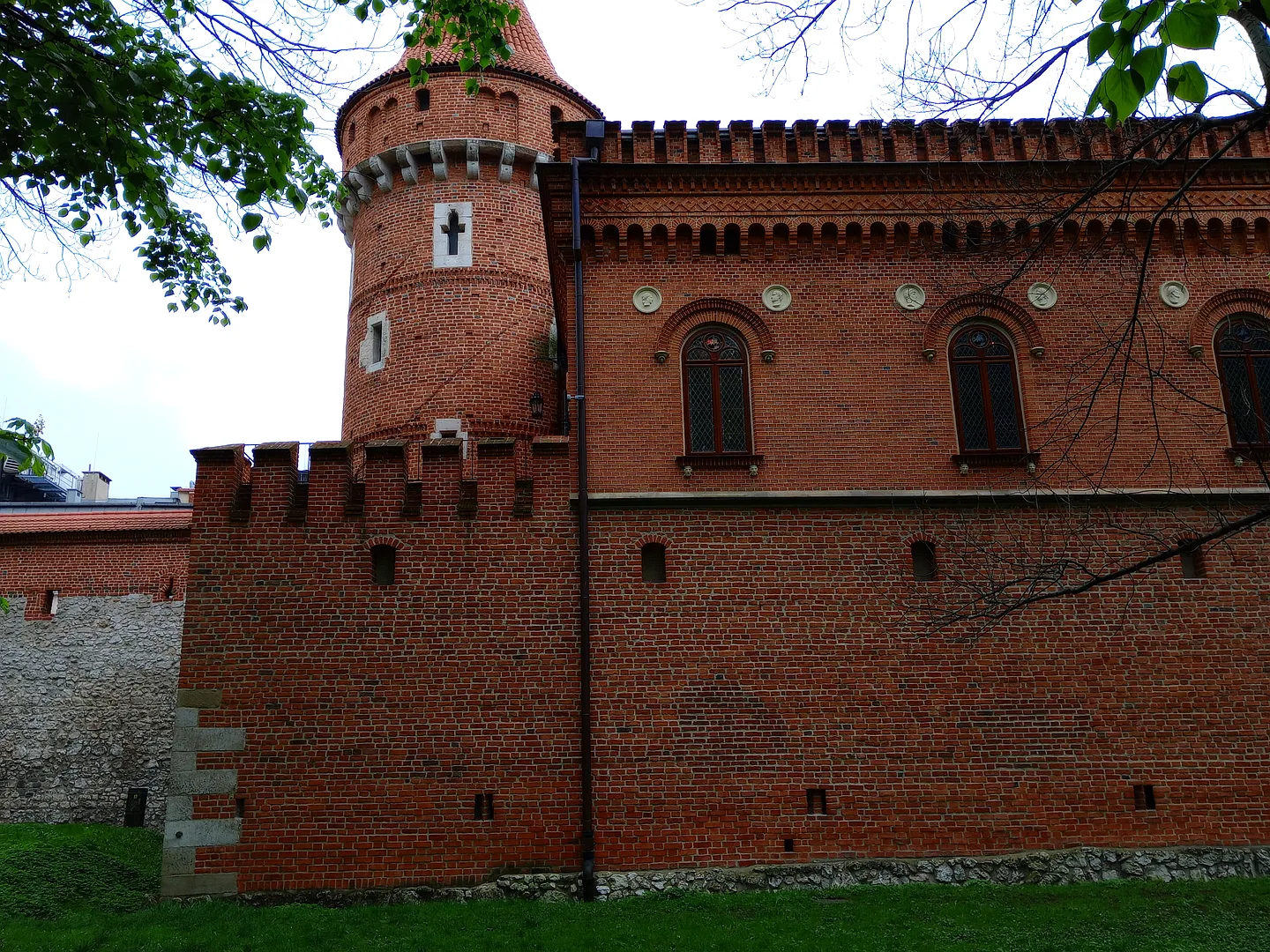
Walking around the curved brick wall lets us see how different this is from a city gate. The low openings and projecting turrets are details to take slowly before stepping into the Old Town.
Protecting the northern entrance
The Barbican was built in 1498–1499 to defend the northern side of Kraków, where there was no natural water barrier. A fortified passage once connected it with Saint Florian’s Gate. That connecting passage was later removed, leaving the circular structure separate from the gate.
As military technology changed, the fortifications lost their earlier role. The Barbican survived the early nineteenth-century demolition of much of the city’s defences and is now a Museum of Kraków branch. Its brick walls, openings and turrets can still be read from the paths outside.
Take a full exterior circuit
We like walking around the curved wall instead of choosing only the front entrance view. Our photographs follow the grass edge, brickwork and different angles on the roofline. Notice how the openings repeat around the circumference.
Then look back towards Saint Florian’s Gate to picture the earlier connection. A walk through the gate into Floriańska is a natural continuation, while a museum visit needs its own opening check.
Plan the visit
Use the surrounding public paths for the exterior walk. Interior museum opening is seasonal or schedule-dependent, so check the Museum of Kraków branch information before buying tickets or making a special journey. Do not climb the walls or enter the grass moat areas where barriers restrict access.
- Walk around the curve to compare the wall openings.
- Check current interior opening through the museum.
Planning sources
Visitor conditions and schedules can change. Check these official sources before travelling.
- Kraków Travel: Barbican construction and surviving fortifications
- Museum of Kraków: current Barbican visiting information
Source links checked September 30, 2026.