A reason to pause here
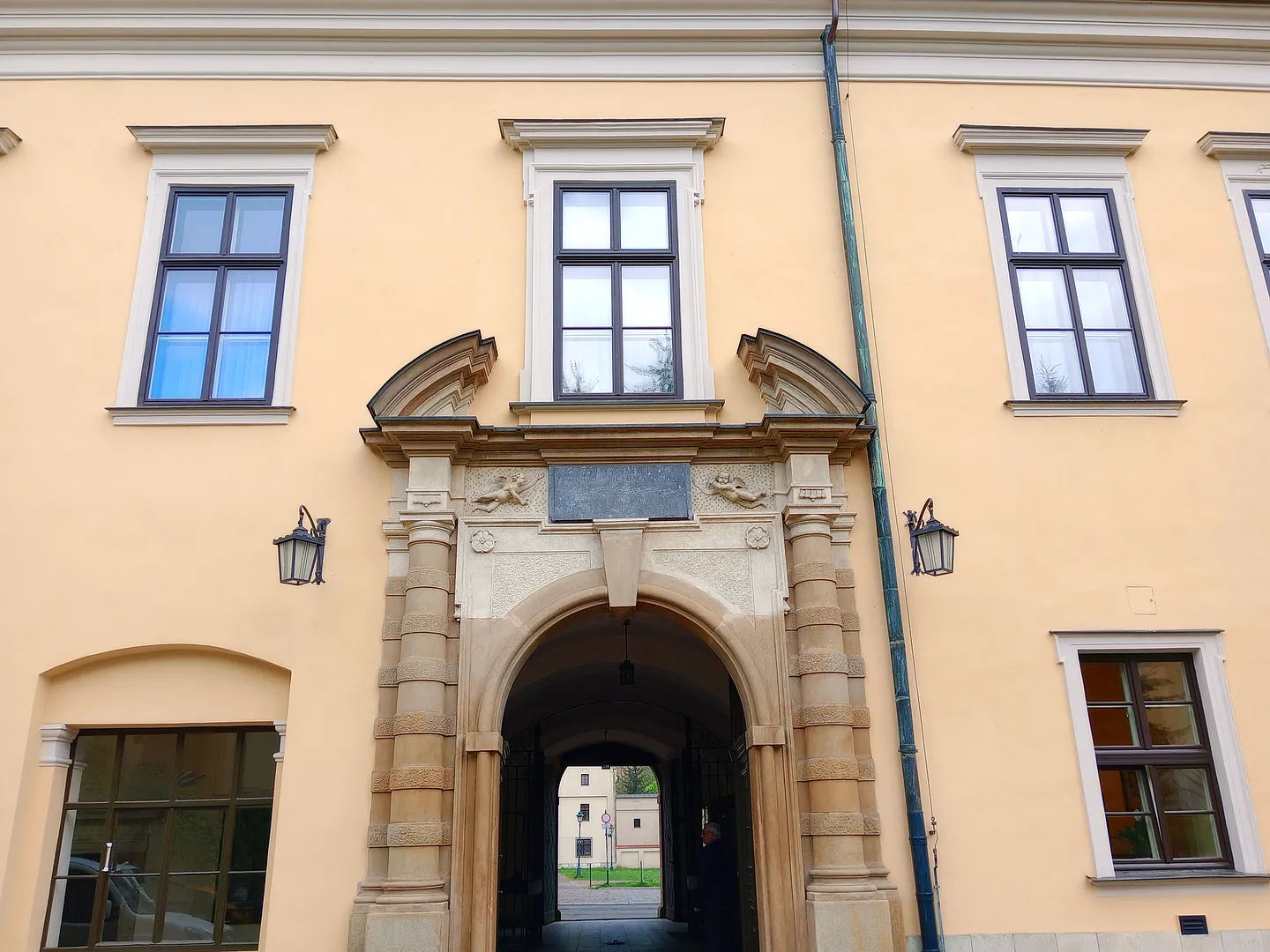
The window above the doorway is small beside the length of the palace façade. Knowing why people gather here changes how we look at this ordinary part of a building.
The window and Karol Wojtyła’s residence
The bishops’ residence at Franciszkańska 3 is first documented in the late fourteenth century. Its present monumental form developed in the first half of the seventeenth century, following earlier fires and rebuilding.
Karol Wojtyła was ordained in the palace in 1946 and lived there as bishop and archbishop from 1964 to 1978. As Pope John Paul II, he returned during visits to Poland and spoke informally to people gathered below the window. That is the specific connection we would have in mind while looking up from the street.
Keep the street view in context
Our photographs give us the façade and window as part of a walk along Franciszkańska. Stand where you can look up without obstructing the pavement, then compare the palace frontage with the Franciscan church across the street.
The window is part of a working bishops’ residence. It is enough to understand its position from outside; a familiar photographed courtyard should not be taken as proof of unrestricted entry today.
Plan the visit
Use the public street viewpoint at Franciszkańska 3. Kraków Travel lists the palace as an exterior visit, so do not plan an interior tour without a separate confirmed arrangement. Follow any current barriers or notices, and keep access clear for residents, worshippers and other pedestrians.
- Look from the public pavement without blocking the way.
- Treat palace interiors as separate, confirmed access.
Planning sources
Visitor conditions and schedules can change. Check these official sources before travelling.
- Kraków Travel: the bishops’ palace and papal window
- Kraków Archdiocese: current residence and church information
Source links checked September 30, 2026.