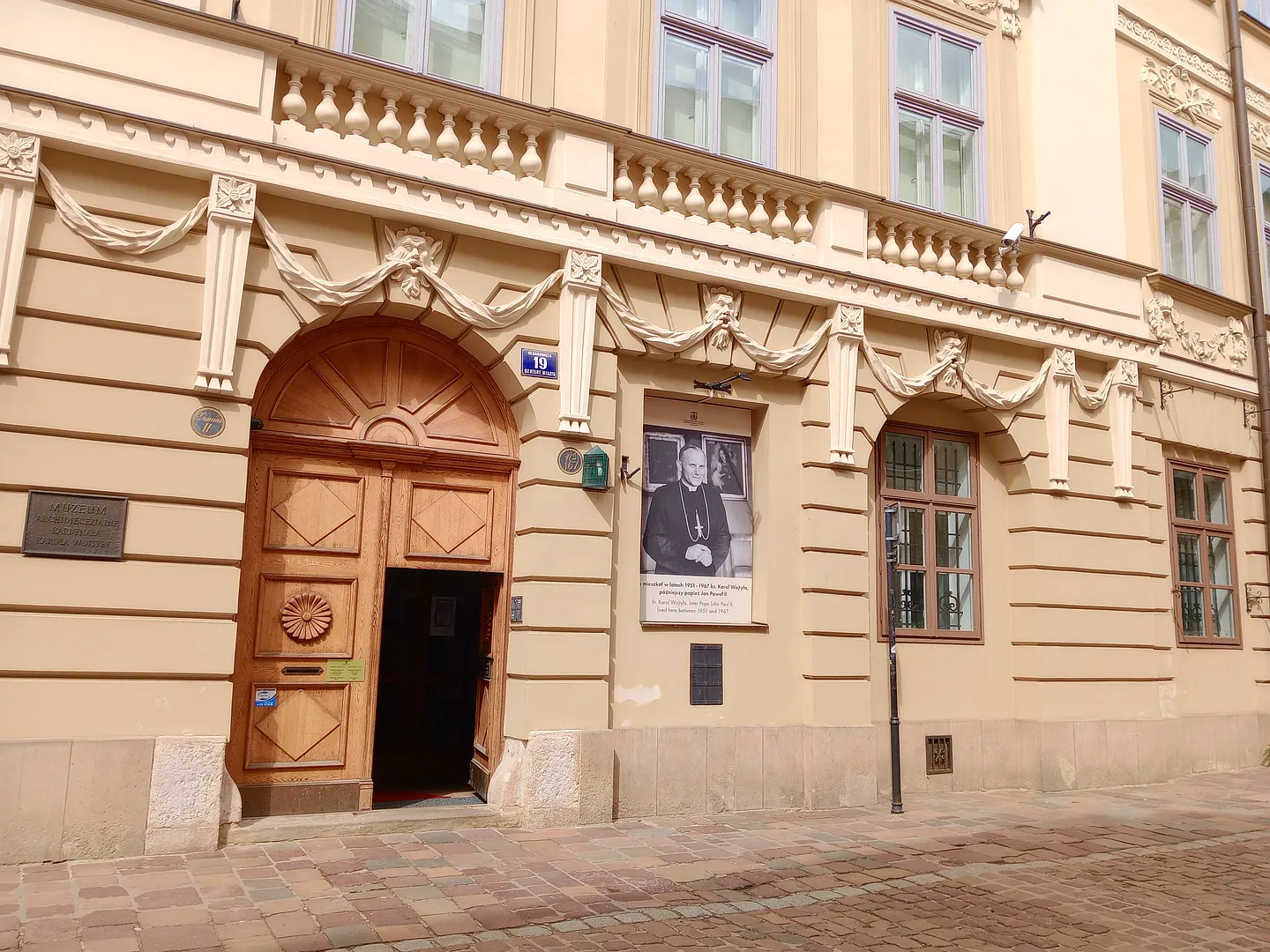
A reason to pause here
Our photographs move from the Kanonicza doorway into paintings and small religious objects, then back to the courtyard. We like a museum visit with room to notice how the house contains its collections.
Kanonicza houses and Karol Wojtyła’s rooms
The museum occupies historic houses on Kanonicza Street. Karol Wojtyła lived at number 19 in 1953–1958, then moved to the neighbouring Deanery at number 21 after becoming a bishop. He remained there until the end of 1967.
The museum presents objects from his life alongside sacred painting, sculpture, vestments and liturgical vessels. Its collection includes Saints from Dębno, a thirteenth-century painting. The house and the works have different histories; we would give each some attention.
Leave room for the small objects
Our gallery includes religious figures, paintings and explanatory displays as well as the courtyard. We would choose a few objects to look at closely, reading their labels before moving on. The changing size of the rooms makes this a different experience from a large museum hall.
Plan the visit
Plan this as an indoor museum visit on Kanonicza, close to Wawel. Check the museum’s current opening and ticket information through Kraków’s visitor service before travelling. Ask about access to upper rooms if stairs are a concern. Photography permissions and the rooms included in a ticket can change with exhibitions.
- Allow time for the sacred-art collection as well as papal mementoes.
- Ask about stair access before buying a ticket if needed.
Planning sources
Visitor conditions and schedules can change. Check these official sources before travelling.
Source links checked September 30, 2026.