Look beyond the counter
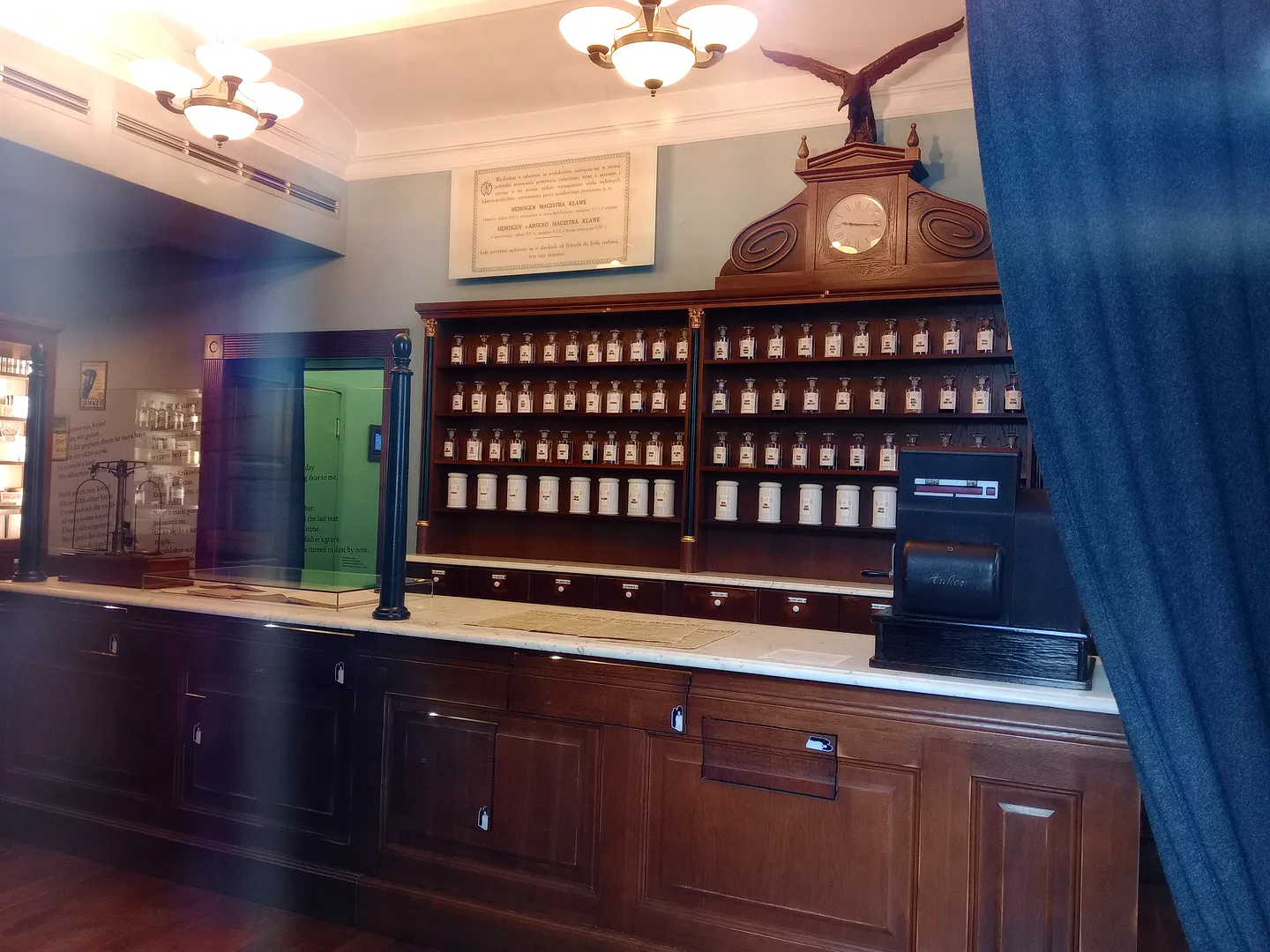
The drawers and counter at the Eagle Pharmacy make us look closely at a working place within the wartime ghetto. We would give the museum enough time for its accounts of people and events, then step back into the square with those accounts in mind.
Pankiewicz’s pharmacy within the ghetto
Tadeusz Pankiewicz ran the Eagle Pharmacy when the German occupation authorities established the ghetto in Podgórze in 1941. He obtained permission to remain. The pharmacy supplied medicines and became a place of help and contact for people confined in the ghetto.
Pankiewicz witnessed the ghetto’s liquidation in March 1943 and later wrote about it. The former pharmacy is now a Museum of Kraków branch, with an exhibition about the ghetto and the people who lived and worked there.
Make time for the individual accounts
The counter and rows of drawers first catch our eye in these photographs. Inside the museum, give the exhibition’s accounts time alongside the reconstructed pharmacy setting. The familiar scale of a workplace brings the history close without needing an invented scene of daily life.
Afterwards, step into Ghetto Heroes Square. The square and surviving wall sections can help connect the museum’s accounts to the streets of Podgórze, but leave space between stops to take in what you have read.
Plan the visit
Check the Museum of Kraków’s current hours, admission and accessibility information for the Eagle Pharmacy. This is the museum on Ghetto Heroes Square, separate from the Pharmacy Museum on Floriańska Street. Follow the exhibition’s photography rules.
- Use the Eagle Pharmacy branch page when booking or checking access.
- Allow time for the exhibition before continuing to the ghetto wall.
Planning sources
Visitor conditions and schedules can change. Check these official sources before travelling.
- Museum of Kraków: Eagle Pharmacy visitor information
- Kraków Travel: Eagle Pharmacy history and exhibition
Source links checked September 30, 2026.