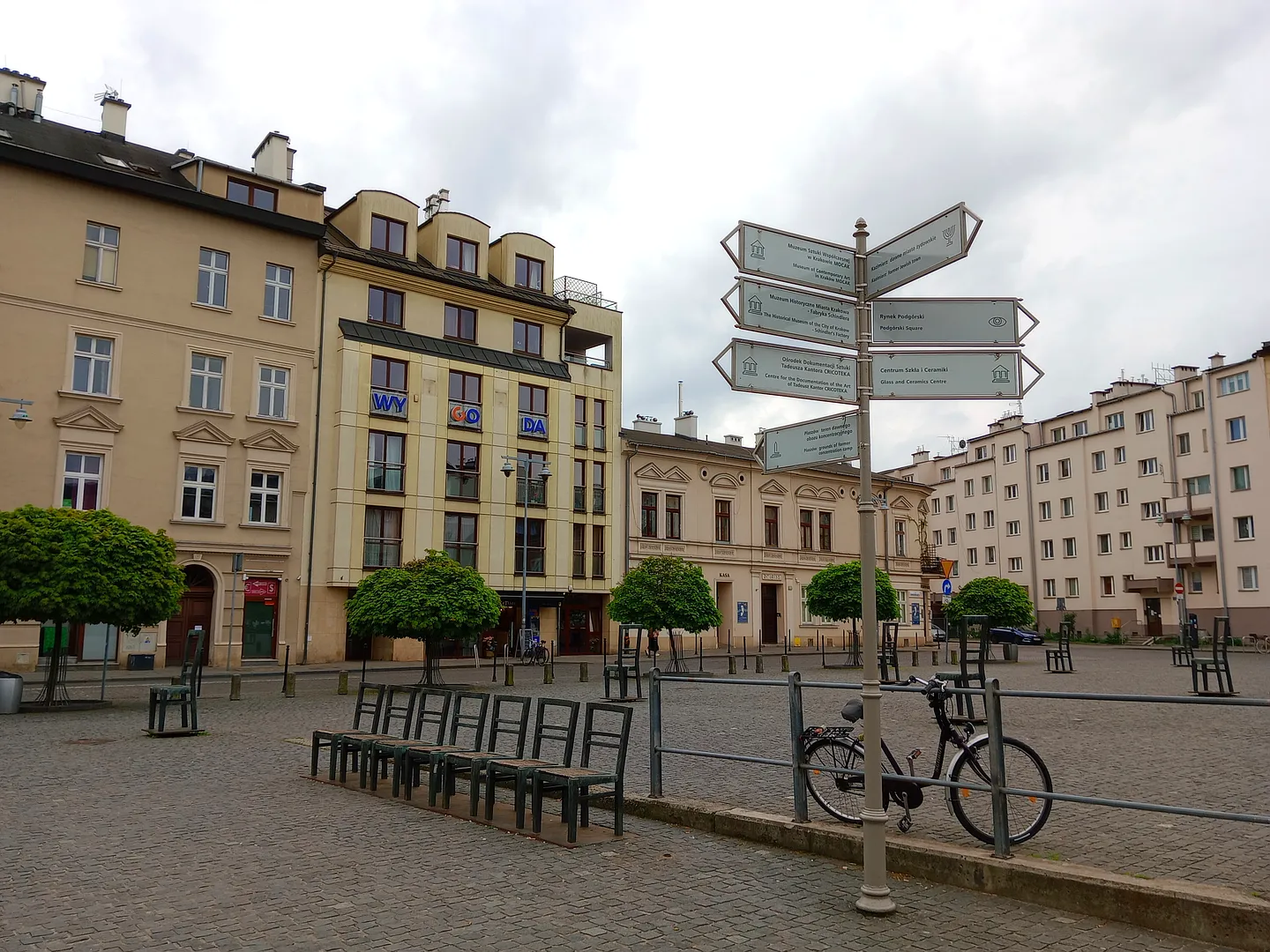
A reason to pause here
The empty chairs ask us to slow down before we start taking photographs. We would read the square together with the Eagle Pharmacy museum and leave room for its account of the ghetto.
The ghetto and the square
The German occupiers established Kraków’s Jewish ghetto in Podgórze in March 1941. This square, then called Plac Zgody, was an assembly point during deportations. The ghetto was liquidated on 13 and 14 March 1943; people were murdered or sent to camps.
The present memorial square opened in December 2005, following a design by Piotr Lewicki and Kazimierz Łatak. Its empty chairs recall the belongings left behind by people forced from their homes. The Eagle Pharmacy at the edge of the square is now a Museum of Kraków branch.
Give the square time
We would put the camera down first and read the site as a memorial. Walking between its edges changes the relationship between the chairs, surrounding houses and pharmacy. A museum visit gives this open space a fuller account of the people who lived here.
Plan the visit
The square is outdoors, while the Eagle Pharmacy has separate admission and opening arrangements. Check the museum before planning an interior visit. Keep clear of ceremonies and people paying their respects; use the pavements carefully around the adjoining tram routes.
- Allow time for the Eagle Pharmacy rather than treating the square as a quick photo stop.
- Read the history before continuing to the surviving ghetto wall.
Planning sources
Visitor conditions and schedules can change. Check these official sources before travelling.
Source links checked September 30, 2026.