Stop for the history
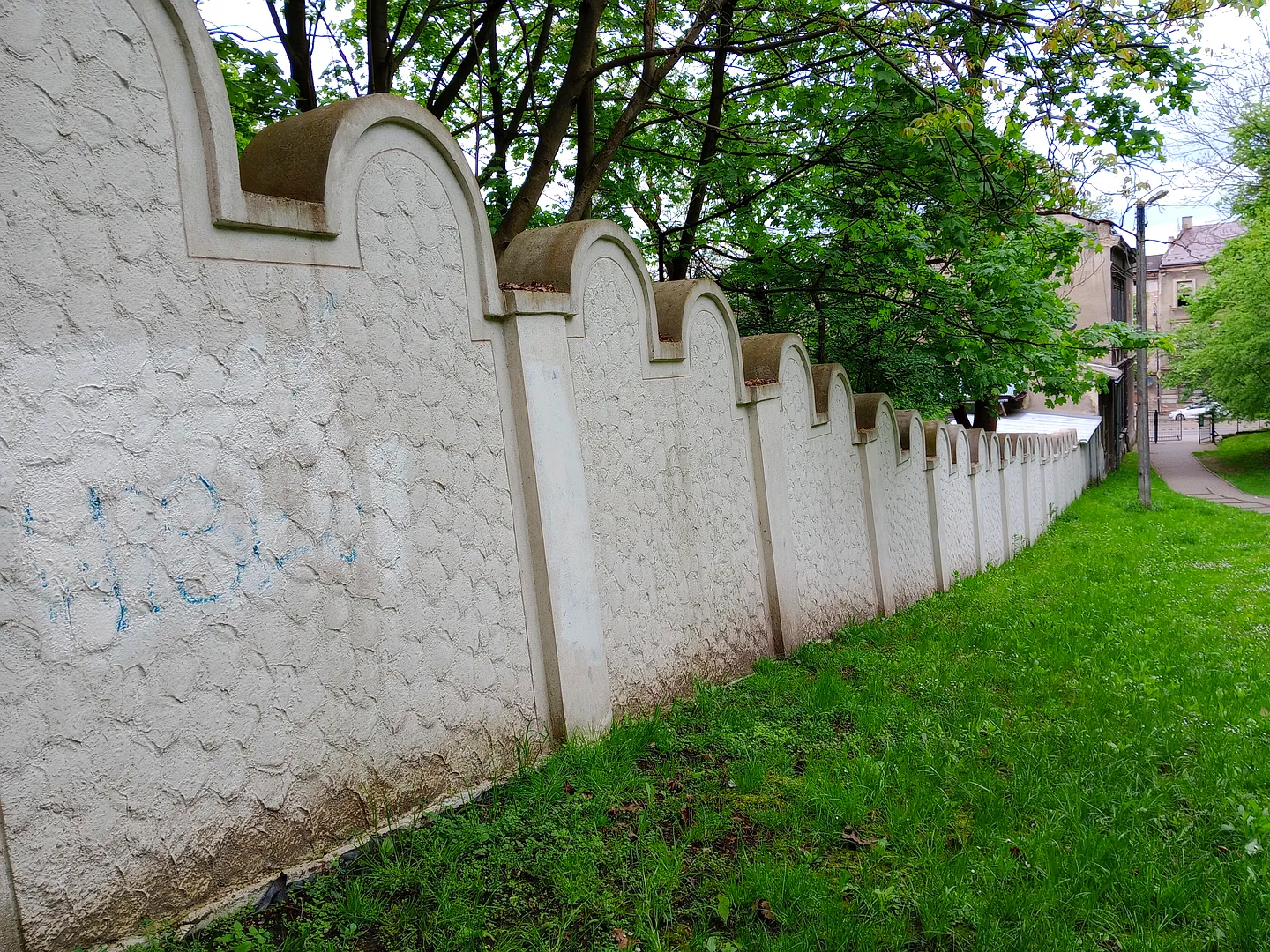
The surviving ghetto wall makes us stop for its history before looking for another view. Our photographs include the wooded ground around the segments, but we would visit with the wartime boundary and the people confined behind it in mind.
The ghetto of 1941–1943
The German occupation authorities established the Kraków ghetto in Podgórze in March 1941. Jewish residents were confined there behind a boundary that included walls with rounded tops. Surviving sections can be seen on Lwowska Street and by the property at Limanowskiego 60/62.
The ghetto was liquidated on 13 and 14 March 1943. People were murdered during the operation or deported. The remaining masonry should be read alongside that history and the accounts preserved by the Museum of Kraków.
Read the surviving boundary
Our gallery includes wall segments and the wooded ground around them. Look for the rounded profile of the surviving ghetto wall; ordinary boundary masonry nearby is part of the present surroundings and should not automatically be identified as the wartime wall.
Continue to Ghetto Heroes Square and the Eagle Pharmacy if you have time for the museum. That combination gives individual accounts and the geography of the former ghetto more space than a quick photograph alone.
Plan the visit
Follow public paths to the surviving sections. Check the Eagle Pharmacy’s current visitor arrangements separately, and allow time to read the memorial information without rushing the next stop.
- Locate the surviving sections using the city’s Podgórze history route.
- Treat memorial visits and photographs with consideration for other visitors.
Planning sources
Visitor conditions and schedules can change. Check these official sources before travelling.
Source links checked September 30, 2026.