A reason to pause here
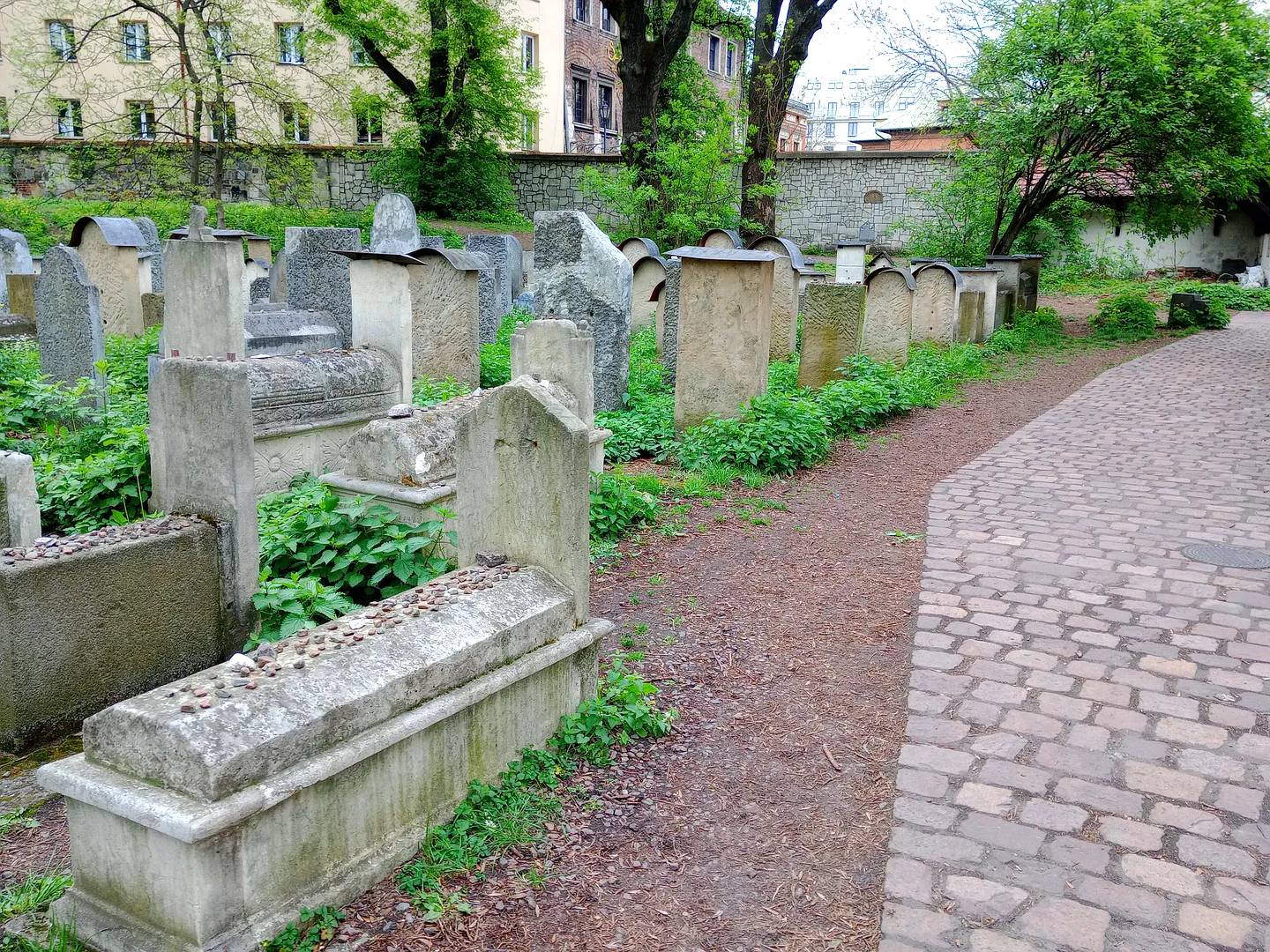
At Remuh Cemetery, we would put the camera down often enough to read the stones and watch where we step. The photographs show narrow paths and closely spaced graves, asking for a quieter pace than the street outside.
Burials, damage and recovered stones
The first burials date from 1551, shortly before the neighbouring Remuh Synagogue was built. The cemetery closed in the early nineteenth century as burial grounds in built-up districts were replaced.
The German occupation brought destruction and misuse of the ground. Work begun in 1956 uncovered hundreds of older gravestones beneath the soil. Fragments that could not be restored were incorporated into the boundary wall. Rabbi Moses Isserles, who died in 1572, is buried here.
Read a few stones carefully
We would put the camera down often and stay with individual names, dates and carving. The closely spaced graves in our gallery ask for a slow route along the paths. Look at the wall fragments without touching or treating them as decoration detached from the cemetery.
Plan the visit
Check current admission with the Jewish community. The visitor listing notes closure on Saturdays and Jewish holidays. Follow requirements about dress and head covering, stay on paths and leave prayer notes and stones undisturbed.
- Plan this separately from the New Jewish Cemetery on Miodowa.
- Keep conversation and photography discreet.
Planning sources
Visitor conditions and schedules can change. Check these official sources before travelling.
Source links checked September 30, 2026.