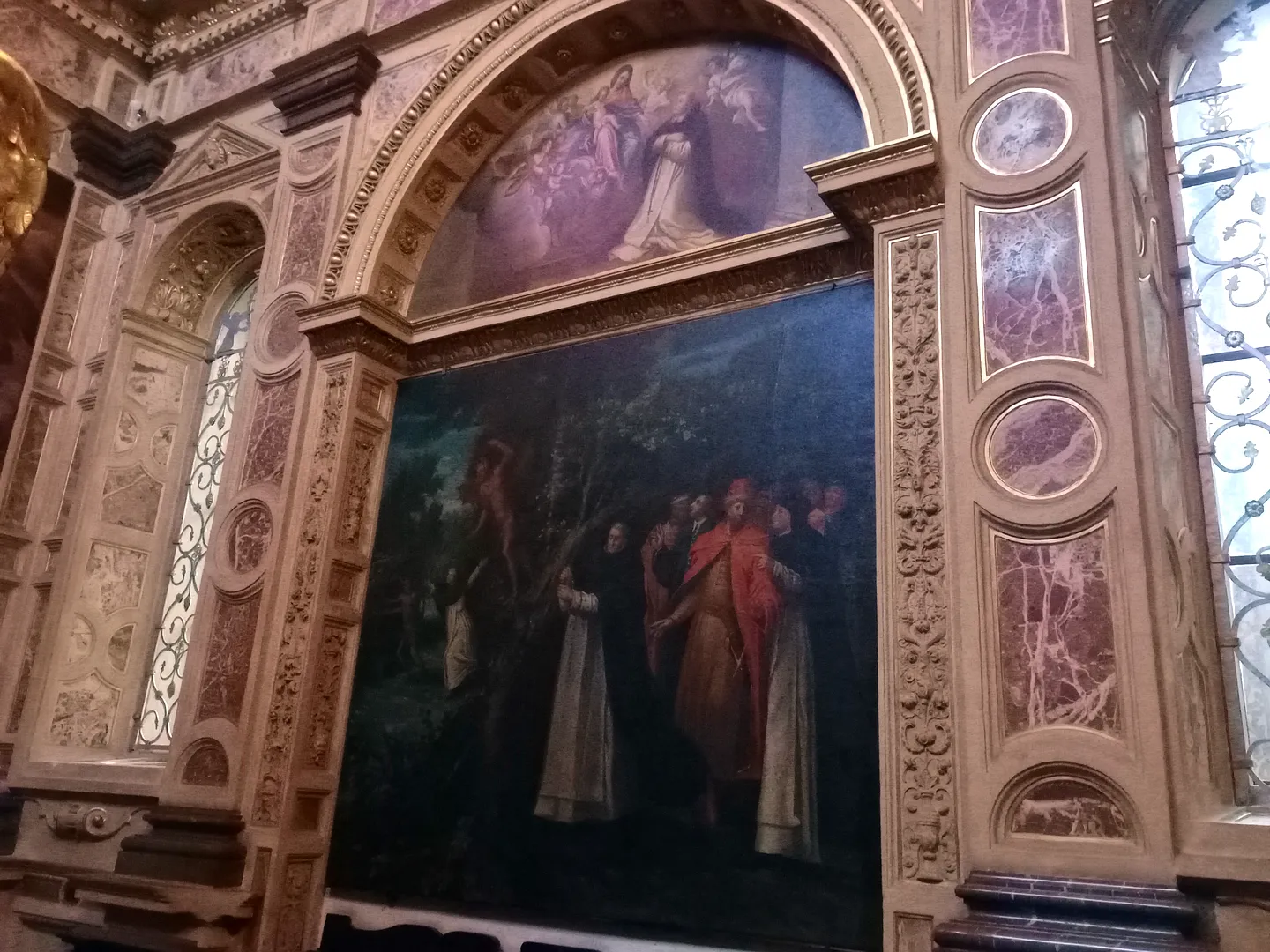
A reason to pause here
The chapel’s marble and gilded carving invite a closer look, but we would make that pause fit around worship in the Dominican church.
Within the Dominican church
The Dominicans received Kraków’s earlier Holy Trinity church in 1222. A new Gothic church followed the mid-thirteenth-century destruction, with later chapels added by benefactors and guilds. Saint Hyacinth’s chapel is an upstairs Renaissance addition, modelled on the Sigismund Chapel at Wawel.
The city fire of 1850 damaged the wider church, which was subsequently rebuilt. Saint Hyacinth’s shrine belongs within this working Dominican complex, so we would understand the chapel alongside the nave and cloisters rather than approach it as an isolated display.
Look at the carving without hurrying
The photographs draw our attention to marble, gilded carving, memorial tablets and the passage around the chapel. We would look at those details in a quiet pause, then return to the wider church to understand where the shrine sits.
If the upper chapel is unavailable, the church and any open cloister route still provide a worthwhile visit. Respect a closed door or barrier instead of trying to recreate a photograph from a different day.
Plan the visit
Check the Dominican community’s current service and visitor information before planning access to the shrine. The upstairs location matters if steps are difficult: ask the community about the route and available assistance in advance. Keep visits quiet during prayer, avoid flash and follow local photography notices.
- Confirm access to the upstairs chapel.
- Fit the visit around services and private prayer.
Planning sources
Visitor conditions and schedules can change. Check these official sources before travelling.
- Kraków Travel: Dominican church and Saint Hyacinth’s chapel
- Kraków Dominicans: current community and service information
Source links checked September 30, 2026.