A reason to pause here
One small stone figure can change what we notice on the approach to Wawel. We would look at its faces before continuing towards the hill.
An outdoor copy of a museum object
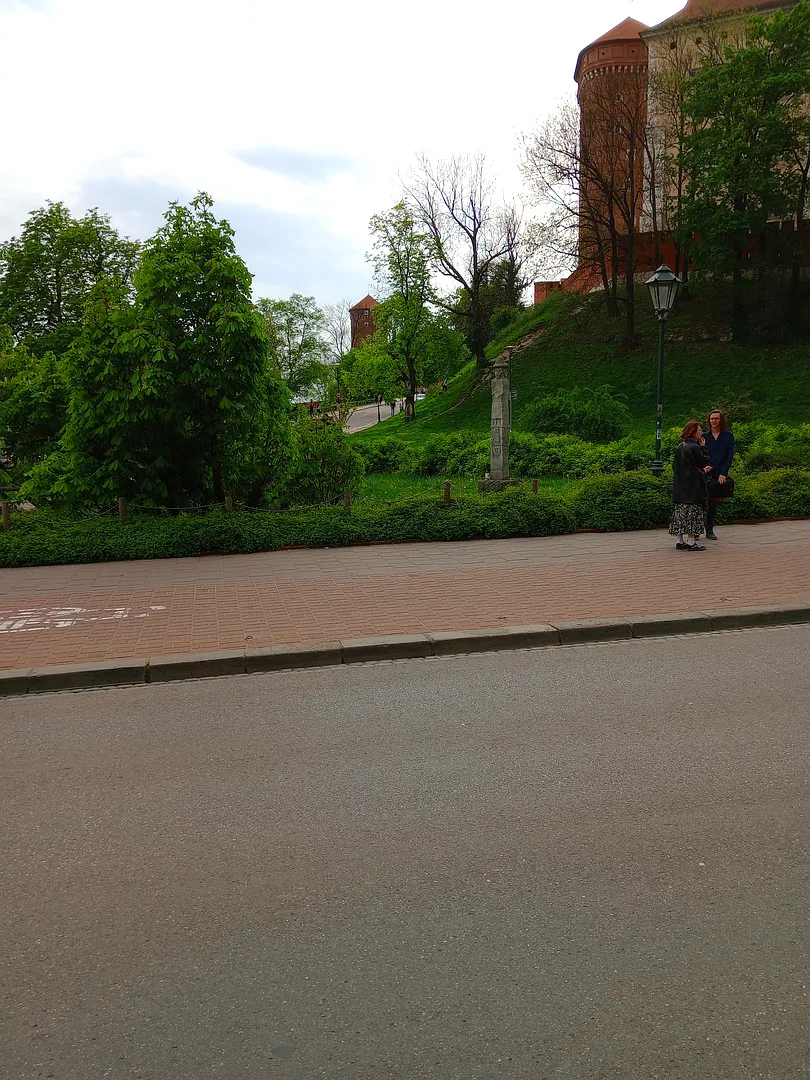
The figure near the foot of Wawel is a replica of the idol discovered in the River Zbruch in 1848. The original reached Kraków on 12 May 1851 after Mieczysław Potocki donated it to the Kraków Scientific Society. It became part of the Archaeological Museum’s collection.
The museum describes the original as a limestone pillar with four faces and three horizontal tiers of figures. Interpretations of its age and meaning require care; the replica gives us a way to notice the form outdoors without claiming that the pavement sculpture is the archaeological find itself.
Look around the faces
We would give the figure a few minutes on the approach to Wawel, looking at the faces and the stacked reliefs from the available public space. Our single photograph places it beside the greenery and hill approach.
If the object interests you, add the Archaeological Museum only after checking which exhibitions are open. Renovation can affect access to the original and to other parts of the museum.
Plan the visit
Use the public pavement at the foot of Wawel and leave the approach clear for other walkers. Do not climb or touch the sculpture to improve a view. For the original object, consult the museum’s current exhibition notices before buying a ticket; the outdoor replica and museum admission are separate visits.
- Distinguish the outdoor replica from the museum’s original.
- Check the museum’s renovation and exhibition notices.
Planning sources
Visitor conditions and schedules can change. Check these official sources before travelling.
- Archaeological Museum: the original idol’s discovery and form
- Kraków city: the replica at the foot of Wawel
- Archaeological Museum: current visitor information
Source links checked September 30, 2026.