A reason to pause here
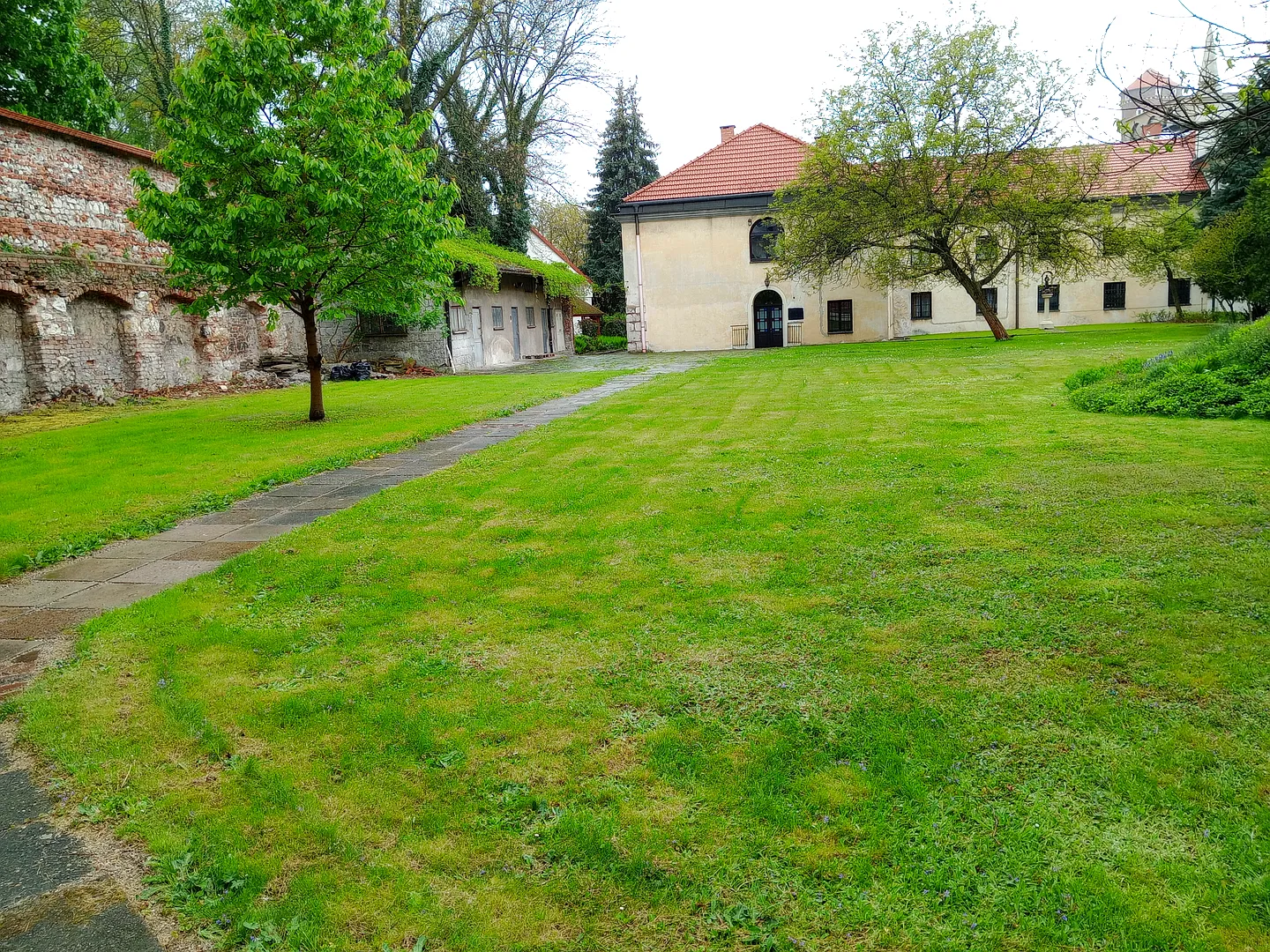
The lawn and narrow passages show another side of the monastery behind its street frontage. We would treat these as views of enclosed grounds and arrange any access with the monastery.
The monastery at the foot of Wawel
The Bernardine community grew in Kraków after the preaching of John of Capistrano in the mid-fifteenth century. Its first Gothic church was destroyed during the Swedish invasion in the seventeenth century. The present church was built later that century in the Baroque style.
The garden belongs to the monastic complex. Our photographs show lawns, narrow passages and walls within those grounds. They do not establish a public garden-opening schedule or a separate historic planting date.
Look at the enclosure and the paths
We are drawn to the narrow passages as much as the open lawn. The walls and doors make the garden feel different from the public Planty nearby. If a visit is arranged, keep to the route agreed with the monastery and leave the working grounds undisturbed.
Plan the visit
Treat the garden as enclosed monastic property. Ask the monastery about any permitted garden visit or public event; church access does not automatically include the garden. An exterior walk around the complex can be paired with Wawel and the Vistula even when the grounds are closed.
- Arrange garden access before including it in an itinerary.
- Use the public riverside paths for an unbooked walk nearby.
Planning sources
Visitor conditions and schedules can change. Check these official sources before travelling.
Source links checked September 30, 2026.