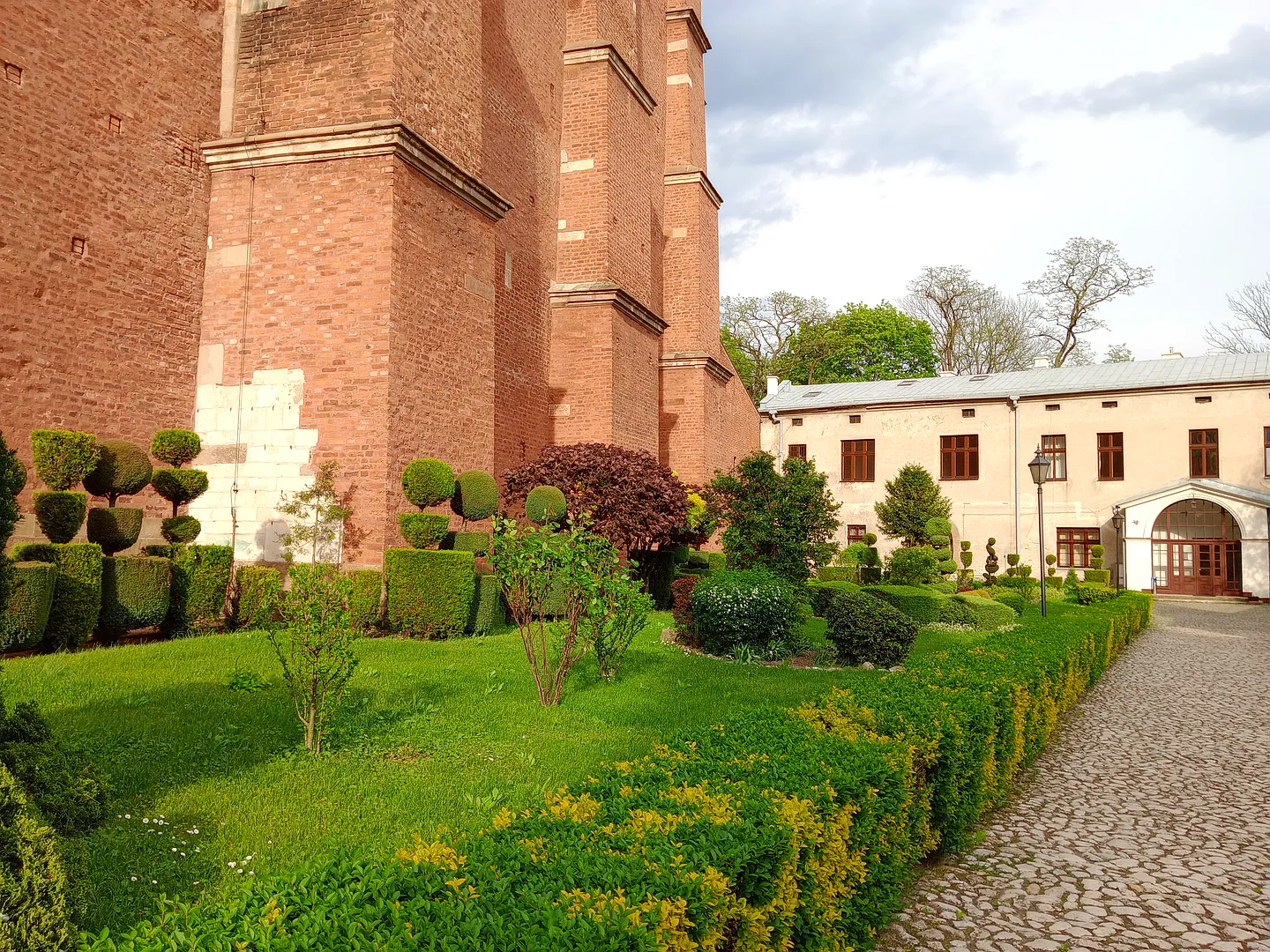
A reason to pause here
The small garden beside the Poor Clares’ walls makes us pause on a walk down Grodzka. We would stay on visitor routes, enjoying the view of the planting without treating a working convent as an open courtyard.
A convent beside Saint Andrew’s
Saint Andrew’s was built in the eleventh century. In the fourteenth century it was entrusted to the Poor Clares, whose convent was built beside the church. Kraków’s official guide describes the order’s enclosed, contemplative life.
The adjoining church later received Baroque tower roofs and interior decoration while retaining its older stone structure. The convent and church share that history, but access to one does not mean that residential or garden areas of the other are open to visitors.
Notice the garden from the permitted route
Our photographs look at planting beside high walls, the low frontage and the convent’s name. We would enjoy those details from an available visitor route, without trying doors or seeking a way into a private garden.
The nearby exterior of Saint Andrew’s gives the stop more architectural context. Its twin towers and thick masonry are worth looking at alongside the lower convent buildings.
Plan the visit
Treat the convent as a working religious residence. Keep to public or expressly open areas and respect gates, barriers and requests for privacy. Kraków Travel lists Saint Andrew’s as open during services; confirm present arrangements before planning to enter, and fit any visit around worship.
- Respect enclosure and photograph from permitted areas.
- Check Saint Andrew’s service access separately.
Planning sources
Visitor conditions and schedules can change. Check these official sources before travelling.
- Kraków Travel: Saint Andrew’s and the Poor Clares
- Kraków Travel: Grodzka Street and neighbouring churches
Source links checked September 30, 2026.