A reason to pause here
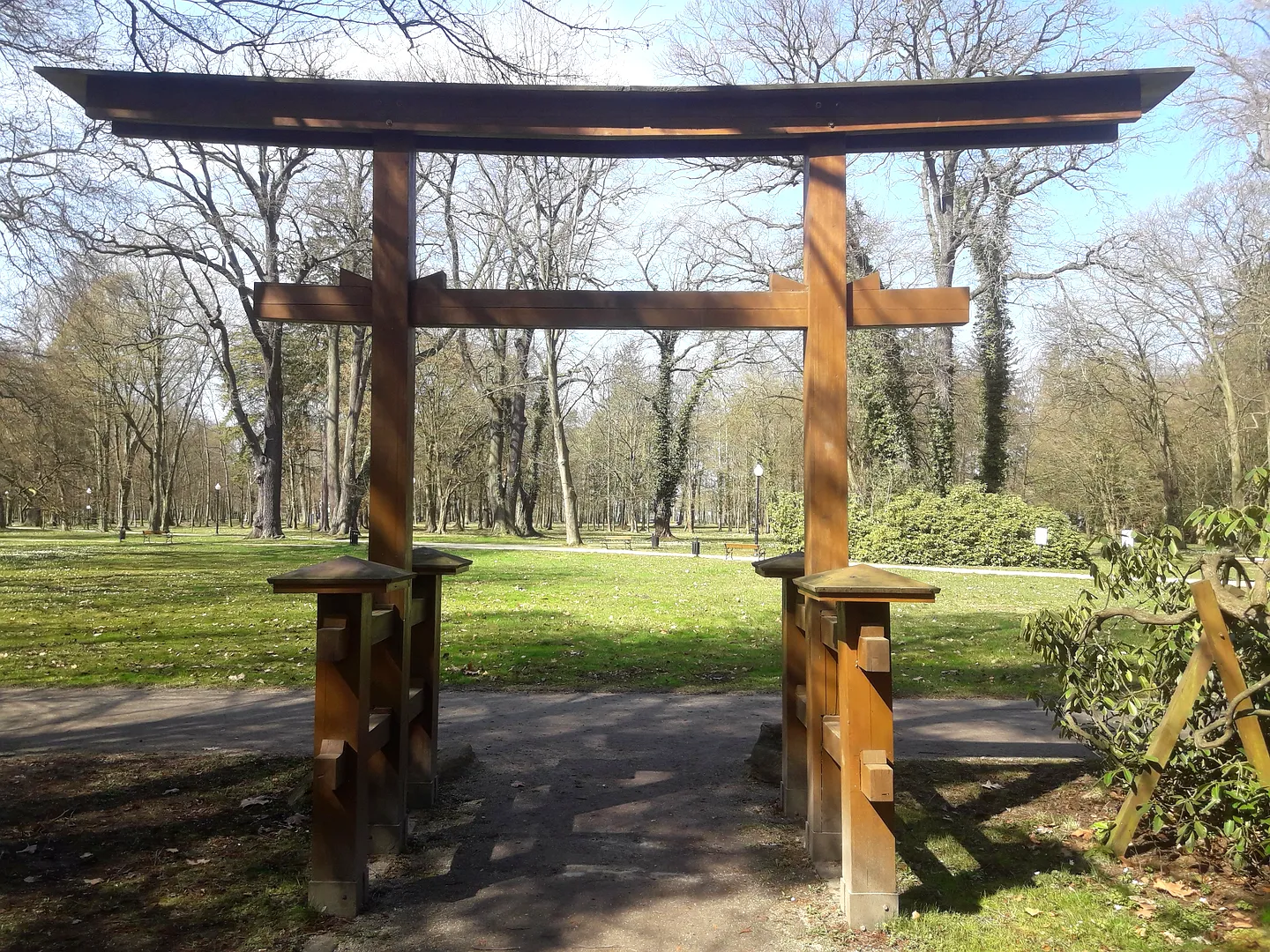
The circular brick opening and the Japanese-style gateway make us want to wander off the palace approach. The different garden layouts reward a visit with room for detours.
A palace and several garden layouts
The palace began as a Renaissance residence in 1626 and later acquired a Baroque wing. The municipality records an eighteenth-century park, enlarged in the nineteenth century. Today the palace has an educational use; a park walk should not assume access to its rooms.
Friedrich von Hochberg owned the estate from 1902 to 1921 and introduced Japanese, English and French garden elements. The gateways and brick garden structures photographed here belong to that varied park setting.
Leave the straight palace approach
The Japanese-style gateway and circular brick opening are the details that make us want to take a detour. We would follow the park paths around them, then return to the palace frontage through the trees. The gallery shows enough changes in setting to make a slow walk more rewarding than a single photograph of the façade.
Plan the visit
Use Iłowa’s municipal park information to plan the entrance and check any maintenance restrictions. Stay on established paths and keep school entrances clear. Ask the municipality about step-free routes if narrow passages or uneven garden paths are a concern. The palace interior requires separate permission.
- Include the Japanese garden structures in your route.
- Treat the palace’s school spaces as separate from the park.
Planning sources
Visitor conditions and schedules can change. Check these official sources before travelling.
- Iłowa municipality: Manor Park and Hochberg’s gardens
- Iłowa municipality: palace history and later use
Source links checked September 30, 2026.