A reason to pause here
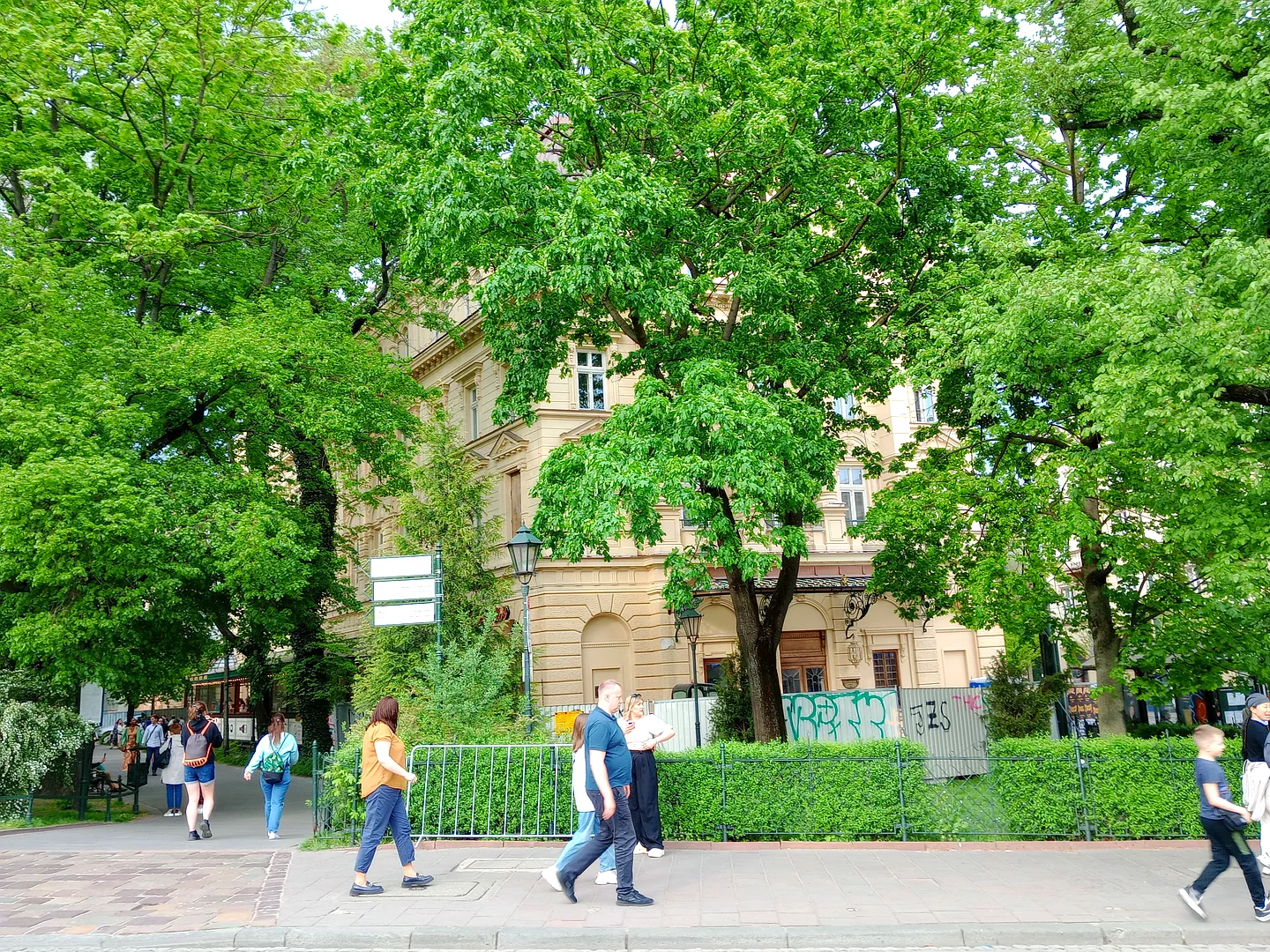
The leafy edge of Wawel is a useful pause before the hill. Our single photograph records the greenery and people moving along the approach.
Part of Kraków’s nineteenth-century park ring
The Planty took shape in the nineteenth century after the removal of most of Kraków’s older fortifications. Radwański’s park proposal and Straszewski’s work produced planted avenues around the Old Town. Wawel sits at the southern end of that walk.
Later flowerbeds, benches and monuments gave the ring places to pause. Our photograph records one green approach beside the hill; it is a small part of the wider park, rather than a separate estate garden.
Leave time between the park and the hill
The single photograph gives us trees, planting and people moving along the approach. We like letting that be enough for a short stop before going uphill, especially when the rest of the day includes several museum entries.
For a longer park walk, continue through the Wawel Garden section of the Planty. For the castle, decide which entrance and exhibition you need before leaving the level paths.
Plan the visit
The Planty approach uses public paths. Wawel’s hill routes, steps and museum entrances require separate planning, so consult the castle’s directions and accessibility information if mobility affects your visit. Keep the park stop flexible around booked exhibition times and use marked crossings where the route leaves the green space.
- Choose the Wawel entrance before leaving the park.
- Keep a short green pause around timed museum entries.
Planning sources
Visitor conditions and schedules can change. Check these official sources before travelling.
- Kraków city: Planty park history and setting
- Wawel Royal Castle: directions to the hill
- Wawel Royal Castle: accessibility
Source links checked September 30, 2026.