A reason to pause here
The older masonry along the park edge gives us something to follow with our eyes. We like a route where a stretch of lawn and a building detail sit side by side.
A park edge with older buildings close by
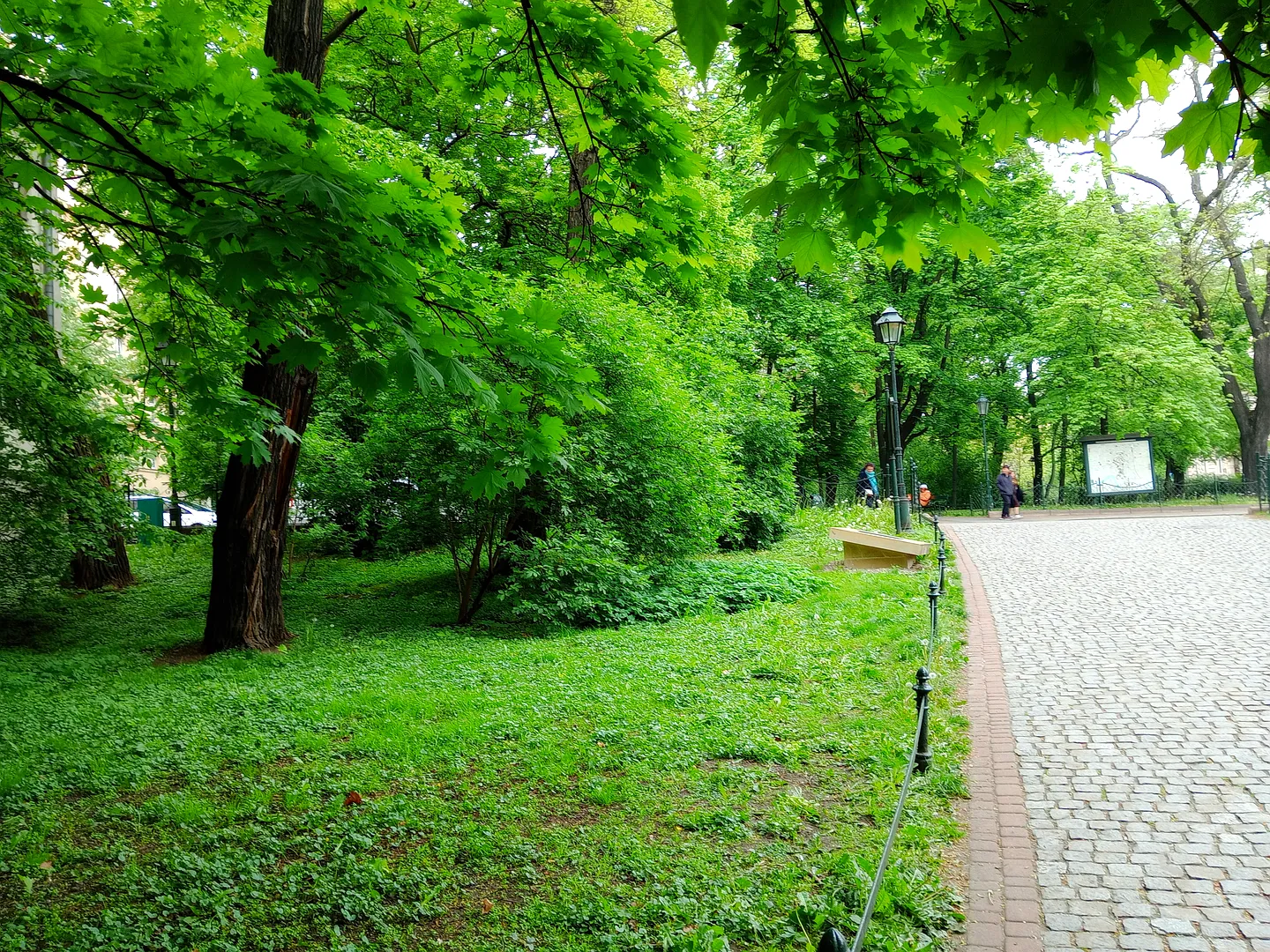
The eastern Planty belongs to the nineteenth-century park ring laid out around the Old Town. Removal of much of the defensive system created space for planted paths, while surviving buildings and masonry remained beside them.
The photographs here focus on the garden edge and older walls. We would distinguish those building details from the lost fortifications: a wall beside the Planty is not automatically a surviving city wall. The park’s layout gives the context; the individual building needs its own identification.
Look at the path and the wall together
Our gallery follows lawns, trees, an inscribed slab and the mixed brickwork at the garden boundary. We like a walk where a small building detail can interrupt the broad view without taking us far from the avenue.
Continue along the green path towards the theatre area, or turn through an Old Town street once you have checked the crossing. A short stretch can be satisfying without completing the whole ring.
Plan the visit
Stay on the public park paths beside Westerplatte. The street carries traffic and trams, so use designated crossings instead of stepping into the road for a wider photograph. Avoid leaning on older masonry or entering enclosed grounds. The current city park information is the place to check for works affecting the paths.
- Use a park viewpoint for photographs beside the road.
- Read inscriptions without entering enclosed building grounds.
Planning sources
Visitor conditions and schedules can change. Check these official sources before travelling.
Source links checked September 30, 2026.